



1 July 2020
Read the full piece (PDF, 3.2 MB)
Key points
- Dr Chung Wai-kit, who has long specialised in vaccination for both adults and infants, gives schools his view on how to choose an outreach vaccination provider.
- Start with the provider’s own website. Schools must choose a doctor or medical institution from the Department of Health’s list; find out which providers in the district offer vaccination, then telephone or read their site to learn whether they have served schools before, and consider their scale and professionalism. A vaccine is given once a year, so a general clinic may not have a proper vaccine fridge, its nurses may have less injection experience, and it will not be used to handling large volumes of student paperwork. A provider that specialises in vaccination or outreach is the safer choice.
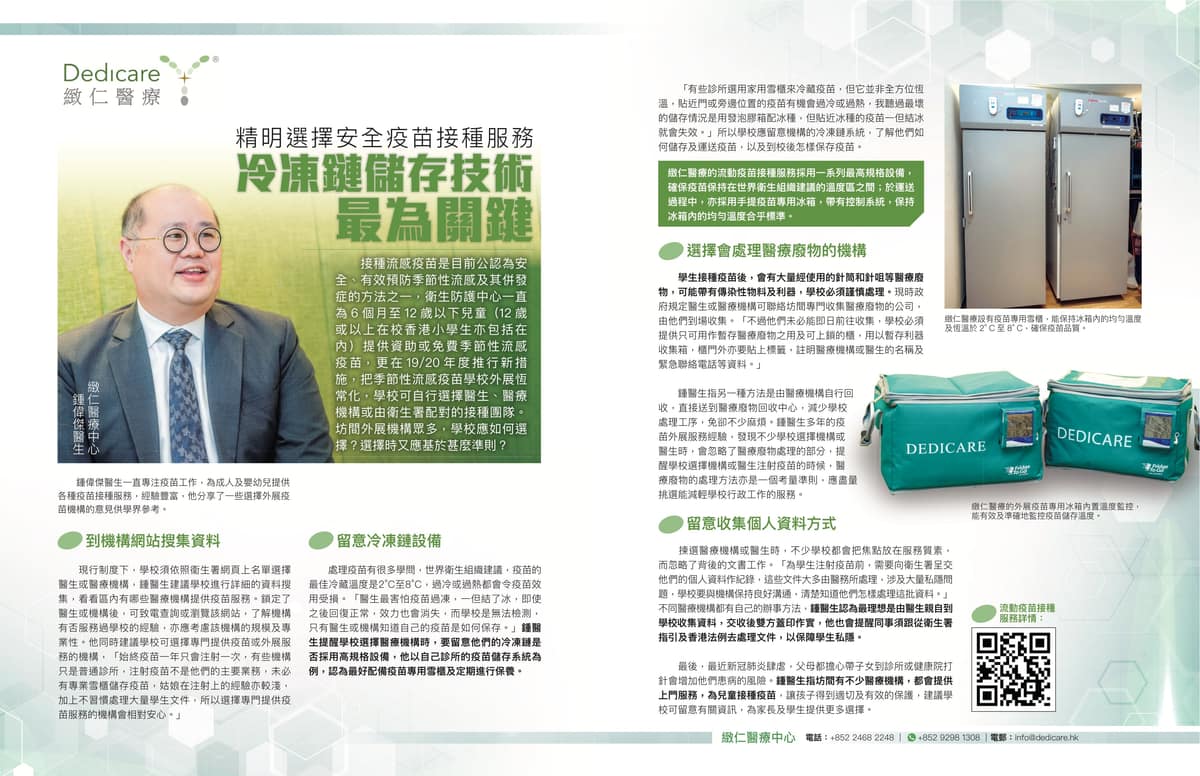
- Look at the cold chain. WHO recommends vaccines be held between 2°C and 8°C; too cold or too hot and their potency suffers. What a doctor fears most is a vaccine that has frozen — once it has, the potency is lost even after it returns to normal, and a school has no way to test for it. Ask whether the provider’s cold chain uses high-specification equipment; a dedicated vaccine fridge, serviced regularly, is best. Dedicare’s mobile vaccination service uses top-specification equipment throughout, including hand-carried vaccine cool boxes with temperature control in transit.
- Choose a provider that deals with the medical waste. Vaccinating students leaves a great many used syringes and needles — potentially infectious material and sharps that a school must handle carefully. Government rules allow the doctor or institution to engage a licensed collection company, but they may not come the same day, so the school must provide a lockable cabinet used only for the temporary storage of medical waste, labelled outside with the institution’s or doctor’s name and an emergency telephone number. The alternative is for the provider to take the waste away itself, direct to a disposal centre, which spares the school the work.
- Ask how personal data will be collected. Students’ personal particulars must be submitted to the Department of Health before vaccination, which involves a great deal of privacy. Schools should keep in close communication with the provider and know exactly how the data will be handled. Dr Chung’s preference is for the doctor to collect the forms from the school in person, with both sides stamping a handover record, and for staff to follow the Department of Health’s guidance and Hong Kong law in handling the documents, so that students’ privacy is protected.
- Finally, with COVID-19, parents worry that taking a child to a clinic or health centre for an injection raises their risk of catching something. Dr Chung notes that a number of providers offer home visits to vaccinate children, and suggests schools pass that on so parents and students have more choice.